
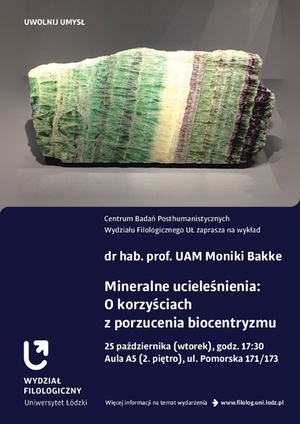
Monika Bakke, dr hab. prof. UAM, pracuje na Wydziale Filozoficznym Uniwersytetu im. Adama Mickiewicza w Poznaniu, gdzie kieruje Centrum Humanistyki Środowiskowej UAM. Zajmuje się humanistyką środowiskową oraz sztuką i estetyką w perspektywie posthumanistycznej, transgatunkowej i genderowej. Ostatnio koncentruje się na badaniu mineralnobiologicznych wspólnot. Autorka książek: Bio-transfiguracje. Sztuka i estetyka posthumanizmu (2010), Ciało otwarte (2000), współautorka Pleroma: Art in search of fullness (1998), redaktorka Estetyki australijskich Aborygenów (2004), Going Aerial: Air, Art, Architecture (2006), The Life of Air: Dwelling, Communicating, Manipulating (2011) oraz Refugia. (Prze)trwanie transgatunkowych wspólnot miejskich (2021). Redaktorka „Czasu Kultury” (2001–2017). Kuratorka wystaw artystycznych, m. in. Seeing the forest through the trees (UK, 2015); Boundless objects (PT, 2019/20) oraz Strzeż (się) tych miejsc (PL 2021).

Thomas Aiello is professor of history and Africana studies at Valdosta State University in Georgia, USA. He is the author of more than twenty books and dozens of peer-reviewed journal articles. His work helped amend the Louisiana constitution to make nonunanimous juries illegal and was cited in the United States Supreme Court as part of its decision ruling them unconstitutional. He holds PhDs in history and anthrozoology, and he also writes about the relationship between humans and animals, in particular the role of speciesism and human supremacy in creating vulnerabilities for nonhuman animals. He serves on the board of the Animals and Society Institute, the largest animal studies think tank in the United States. Learn more at www.thomasaiellobooks.com.

prof. UŚ, dr Anna Malinowska is an author, cultural theorist and associate professor in media and cultural studies at the Faculty of Humanities, University of Silesia (Poland), and a former Senior Fulbright Fellow at the New School in New York. Her research concentrates on cultural theory, love studies, digital humanities and critical robotics — with a special focus on the formation of cultural norms and the social, emotional and aesthetic codes in relation to digitalism.

dr Ada Florentyna Pawlak - antropolożka technologii, prawniczka i historyczka sztuki, wykładowczyni akademicka (Psychologia i Informatyka, SWPS; Trendwatching&Future Studies AGH; Business Process Automation WZ UŁ; Business AI w Akademii im. Leona Koźmińskiego w Warszawie) i speakerka w obszarze nowych technologii. Specjalizuje się w obszarze społecznych implikacji sztucznej inteligencji i transhumanizmu. Prowadzi zajęcia dotyczące antropologii technologii i kultury cyfrowej, technointymności i współpracy człowieka z maszyną. Bada jak rozwój technologicznych narzędzi wpływa na wyobrażenia społeczne. Założycielka Polskiego Stowarzyszenia Transhumanistycznego i organizatorka corocznych konferencji naukowych: „Transhumanizm. Idee, Strategie, Wątpliwości”. Stała felietonistka magazynu „Domena” Polskiego Towarzystwa Informatycznego. Według „Forbes Women” jedna z 22 najbardziej wpływowych Polek w obszarze nauki i biznesu w 2022 roku. Laureatka projektu Jutronauci Gazety Wyborczej&Kulczyk Investment. Tworzy i realizuje projekty edukacyjno-rozwojowe i integracyjne dla szkół, firm i grup międzypokoleniowych.